

Introduction
A thunderegg is a fascinating natural wonder. These rock formations, often confused with geodes, are actually different in their formation and composition. Thunder eggs have a rich history and hold great significance among collectors and geologists. In this guide, we’ll dive into what thunder eggs are, how they form, and where you can find them.
Understanding Thundereggs : Thundereggs vs. Geodes
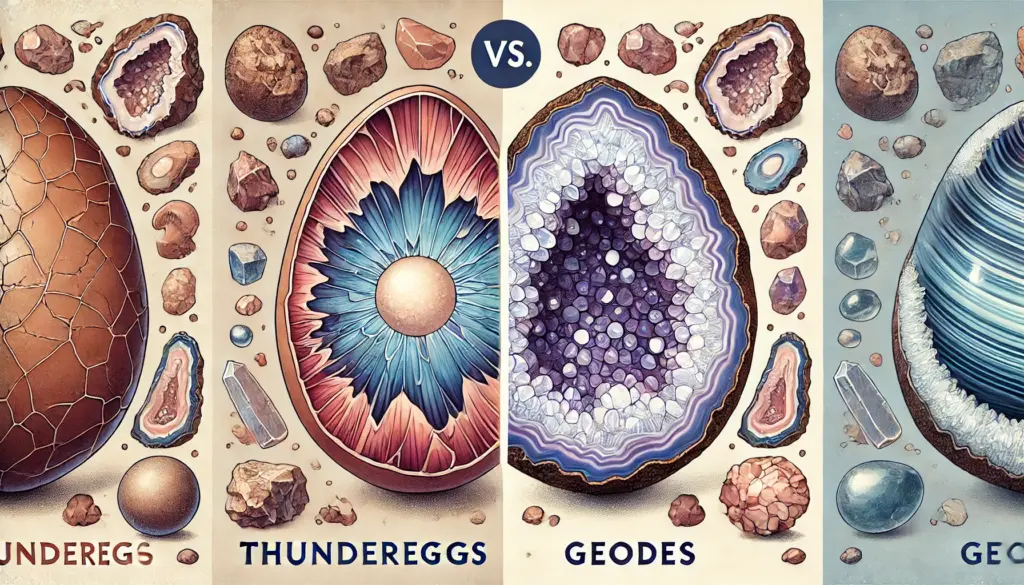
Thundereggs and geodes are often mistaken for one another, but they are different. Thundereggs are solid nodules filled with minerals like agate, jasper, or opal. Geodes, however, are hollow with crystals inside. This confusion happens because both look like plain rocks on the outside but reveal beautiful interiors when cut open.
Here’s a simple comparison:
| Feature | Thundereggs | Geodes |
|---|---|---|
| Composition | Solid, filled with minerals | Hollow, lined with crystals |
| Formation | Volcanic ash beds | Sedimentary or volcanic rocks |
| Appearance | Solid interior | Hollow interior |
These key differences help explain why thundereggs and geodes, despite their similar exteriors, are unique. Thundereggs, found mainly in places like Oregon, often contain intricate patterns, making each one special.
Geodes, on the other hand, are prized for their crystal linings. Knowing these distinctions can enhance your appreciation and identification of these fascinating rocks.
Thunderegg Formation Process
The formation of a thunder egg is a fascinating process that begins with volcanic activity. Millions of years ago, volcanic eruptions spread ash across large areas. This ash contained gas bubbles that created cavities as it cooled and hardened. These cavities are the starting points for thunder eggs.
Over time, mineral-rich water seeped into these cavities. This water carried dissolved silica and other minerals, which slowly filled the spaces. As the water evaporated, it left behind layers of agate, jasper, or opal, forming the beautiful patterns seen in thunder eggs. This process can take millions of years, making each thunder egg a unique piece of natural history.
Here’s a simple breakdown of the formation process:
- Volcanic Ash: Volcanic eruptions spread ash, which cools and forms hard layers.
- Gas Bubbles: Gas bubbles create cavities in the ash layers.
- Mineral-Rich Water: Water carrying minerals seeps into the cavities.
- Formation of Minerals: As the water evaporates, minerals like agate, jasper, or opal form inside the cavities.
This process explains why thunder eggs are often found in volcanic regions. The intricate patterns and vibrant colors are a result of the minerals deposited over time. Understanding this process helps appreciate the beauty and uniqueness of each thunder egg.
This formation process also makes thunder eggs valuable to collectors and geologists who study these natural wonders.
How to Identify Thunder Eggs
Identifying thunder eggs can be a fun and rewarding experience. To start, look for rocks that are round or oval in shape. These rocks might not look special from the outside, but their rough, bumpy surface is a good clue that you might have found a thunder egg.
Here are some tips for identifying thunder eggs:
- Shape and Size: Thunder eggs are often round or oval and can range from small to quite large.
- Weight: They are usually heavier than regular rocks of the same size because they are solid inside.
- Texture: The outer surface is rough and can be pitted or bumpy, unlike the smooth surface of many other rocks.
- Interior: When you cut a thunder egg open, you’ll find beautiful patterns of agate, jasper, or opal. The inside can have layers of different colors and intricate designs.
If you’re out in the field, you might need some tools to help you identify a thunder egg. A rock hammer and chisel can help you carefully split the rock to see the interior. Remember to wear safety goggles to protect your eyes from flying debris.
Knowing these characteristics will help you distinguish thunder eggs from other rocks. Whether you’re a beginner or a seasoned rockhound, identifying thunder eggs adds excitement to your rock-hunting adventures.
Comparison of Thunder Eggs and Regular Rocks
| Feature | Thunder Eggs | Regular Rocks |
|---|---|---|
| Shape | Round or oval | Various shapes |
| Weight | Heavier due to solid interior | Varies, generally lighter |
| Texture | Rough, bumpy exterior | Smooth or varied textures |
| Interior | Agate, jasper, or opal patterns | No specific pattern or minerals |
By keeping these tips and comparisons in mind, you’ll have a better chance of identifying thunder eggs during your next outdoor adventure.
Common Minerals Found in Thundereggs
Thundereggs are admired for their stunning interiors filled with a variety of minerals. The most common minerals found in thundereggs include agate, jasper, and opal. Each mineral adds its unique beauty and value to these rocks.
- Agate: Agate is the most common mineral found in thundereggs. It forms in layers, creating beautiful banded patterns in various colors like blue, red, and white. Agate is prized for its durability and vibrant appearance.
- Jasper: Jasper is another mineral commonly found in thundereggs. It usually appears in red, yellow, or brown colors. Jasper has a more opaque look compared to agate and often shows interesting patterns and swirls.
- Opal: Although less common, opal can be found in some thundereggs. Opal adds a unique play of colors, known as “opalescence,” making the thundereggs even more special and valuable.
These minerals contribute to the diverse and beautiful appearances of thundereggs, making each one a unique natural artwork.
Here’s a simple comparison of these minerals:
| Mineral | Appearance | Common Colors | Value |
|---|---|---|---|
| Agate | Banded patterns, translucent | Blue, red, white, various | High due to beauty |
| Jasper | Opaque, patterned, swirled | Red, yellow, brown | Moderate, very durable |
| Opal | Play of colors, opalescence, translucent | Various, often multi-colored | High due to rarity |
Where to Find Thunder Eggs
Finding thunder eggs can be an exciting adventure. These geological treasures are mainly found in areas with volcanic activity. The most popular place to hunt for thunder eggs is Oregon, particularly in the central and eastern parts of the state.
Oregon’s high desert regions, like Richardson’s Rock Ranch and the Priday Agate Beds, are famous for abundant and high-quality thunder eggs.
Here are some top locations in the USA for thunder egg hunting:

- Oregon: Known as the best place to find thunder eggs. Locations like Richardson’s Rock Ranch and the Ochoco Mountains are prime spots.
- New Mexico: Rockhound State Park is a great place to dig for thunder eggs. It’s a popular spot for both beginners and experienced rockhounds.
- Arizona: The deserts of Arizona, especially the Black Hills near Safford, are rich with thunder eggs.
For those looking to hunt outside the USA, places like Mexico and Germany are also known for their thunder eggs.
When planning your thunder egg hunting trip, consider these tips:
- Public Lands: Many public lands allow rockhounding. Check local regulations and obtain any necessary permits.
- Pay-to-Dig Sites: These sites charge a fee but often guarantee a good haul. They provide tools and sometimes guidance, making them perfect for beginners.
Knowing where to look can make your thunder egg hunting adventure successful and enjoyable.
Comparison of Top Thunder Egg Locations
| Location | Features | Best Time to Visit |
|---|---|---|
| Oregon | High quality, abundant, various sizes and colors | Spring and Fall |
| New Mexico | Rockhound State Park, accessible for all levels | Spring and Fall |
| Arizona | Desert areas, unique finds | Fall and Winter |
By visiting these locations, you increase your chances of finding beautiful thunder eggs. Remember to respect the environment and follow local guidelines while collecting.
Thunderegg Hunting Tips
Hunting for thunder eggs can be an exciting and rewarding experience. Here are some practical tips to help you find these geological treasures.
What Tools to Bring
To ensure a successful thunder egg hunting trip, pack the right tools:
- Rock Hammer: Essential for breaking rocks open.
- Chisel: Useful for more precise work.
- Safety Goggles: Protect your eyes from flying debris.
- Gloves: Keep your hands safe and comfortable.
- Sturdy Bag: To carry your finds.
These tools will help you effectively search for and extract thunder eggs.
Best Times of the Year for Hunting
The best times to hunt for thunder eggs are in the spring and fall. During these seasons, the weather is mild, making it more comfortable to spend long hours outdoors. Avoid hunting during extreme heat in the summer or the cold winter months, as these conditions can make your trip less enjoyable and even dangerous.
Safety Considerations
Safety is crucial when hunting for thunder eggs. Here are some tips to keep in mind:
- Stay Hydrated: Bring plenty of water, especially if you’re hunting in a desert area.
- Watch the Weather: Check the weather forecast before heading out and be prepared for sudden changes.
- Wildlife Awareness: Be aware of local wildlife and know what to do if you encounter any potentially dangerous animals.
- Buddy System: If possible, hunt with a friend for added safety and assistance.
By following these tips, you can have a safe and successful thunder egg hunting experience.
Comparison of Hunting Seasons
| Season | Pros | Cons |
|---|---|---|
| Spring | Mild weather, pleasant conditions | Possible rain, muddy conditions |
| Summer | Longer daylight hours | Extreme heat, risk of dehydration |
| Fall | Mild weather, less crowded | Shorter days, possible early cold snaps |
| Winter | Cool temperatures in desert areas | Cold weather, limited daylight |
Using the right tools, hunting during the optimal seasons, and prioritizing safety can make your thunder egg hunting trip both enjoyable and fruitful.
How to Collect and Cut Thundereggs
Collecting and cutting thundereggs can be an exciting and fulfilling activity. To make sure you get the best results, follow these steps and tips.
Techniques for Extracting Thundereggs

When you’re out in the field, look for areas known for thundereggs, such as volcanic regions or specific rockhounding sites. Use a rock hammer and chisel to carefully extract the thundereggs from the ground. Be gentle to avoid damaging the rock. If the thundereggs are embedded in hard rock, a pickaxe can be useful.
- Rock Hammer and Chisel: Use these tools to carefully break the rock around the thunderegg.
- Safety Goggles: Always wear eye protection to guard against flying debris.
- Gloves: Protect your hands from sharp edges and rough surfaces.
- Sturdy Bag: Carry your finds in a durable bag to prevent damage.
Cutting and Polishing Tips
Once you’ve collected your thundereggs, the next step is to cut and polish them to reveal their beautiful interiors. Here’s how:
- Rock Saw: Use a rock saw to cut the thunderegg in half. A diamond blade works best for this.
- Polishing Wheel: After cutting, use a polishing wheel with different grits to smooth and shine the cut surfaces.
- Polishing Compound: Apply a polishing compound to get a high-gloss finish.
Cutting and polishing can take some practice, but the results are worth it. You’ll uncover stunning patterns and colors inside the thundereggs.
Uses of Thundereggs
Thundereggs are versatile and have various uses, making them highly valued. One of the most popular uses of thundereggs is in jewelry making. The unique patterns and colors inside thundereggs make them perfect for creating beautiful, one-of-a-kind pieces. Jewelry makers often cut and polish thundereggs to create stunning pendants, rings, and earrings.
Another common use for thundereggs is as decorative items. When cut and polished, thundereggs can be displayed in homes and offices as eye-catching natural decor. Their vibrant colors and intricate designs make them a great addition to any room, adding a touch of nature’s beauty indoors.
Thundereggs also play a significant role in education. Schools and museums use thundereggs to teach about geology and volcanic activity. They provide a tangible way for students to learn about rock formation and the different minerals found inside these fascinating rocks.
Here’s a comparison of the popular uses of thundereggs:
| Use | Description | Benefits |
|---|---|---|
| Jewelry Making | Creating unique jewelry pieces | Beautiful, unique, valuable |
| Decorative Items | Polished for home and office decor | Natural beauty, conversation starters |
| Educational | Used in schools and museums | Hands-on learning, geological education |
Thundereggs’ unique appearance and educational value make them a treasure worth exploring. Whether you’re a jewelry maker, a decorator, or an educator, thundereggs offer something special for everyone.
Read More On: What Chicken Lays Blue Eggs?
FAQs
A thunder egg is a nodule formed in volcanic ash beds, filled with minerals like agate, jasper, or opal. Unlike geodes, thunder eggs are solid and not hollow. They have a rough exterior, but when cut open, they reveal beautiful patterns and colors inside. Thunder eggs are often sought after by collectors and geology enthusiasts for their unique appearance.
Thundereggs and geodes differ mainly in their structure. Thunder eggs are solid and filled with minerals, while geodes are hollow and lined with crystals. Thundereggs form in volcanic ash beds, whereas geodes typically form in sedimentary or volcanic rocks. This makes thundereggs solid with intricate patterns inside, while geodes have an empty cavity with crystal linings.
Thunder eggs are commonly found in the USA, especially in Oregon, New Mexico, and Arizona. In Oregon, places like Richardson’s Rock Ranch are popular spots. You can also find them in Rockhound State Park in New Mexico and the deserts of Arizona. Public lands and pay-to-dig sites are great for both beginners and experienced rockhounds.
Thundereggs often contain agate, jasper, and opal. Agate is known for its colorful bands, jasper for its vibrant hues, and opal for its shimmering colors. These minerals create stunning patterns and colors inside the thundereggs, making each one unique. Collectors prize these minerals for their beauty and rarity.
To cut a thunder egg, you need a rock saw to slice it in half. Once cut, use a polishing wheel to smooth and shine the surfaces. Start with coarse grit and gradually move to finer grits. Finally, apply a polishing compound for a high-gloss finish. This process reveals the beautiful patterns and colors inside the thunder egg.
Thundereggs are not extremely rare, but finding a well-formed and beautifully patterned one can be uncommon. Their uniqueness and the beautiful minerals inside make them valuable to collectors. Locations like Oregon have many thundereggs, but the quality and patterns can vary, adding to their allure and value.
For thunderegg hunting, you need a rock hammer and chisel to extract them from the ground. Safety goggles are essential to protect your eyes from flying debris. Gloves will protect your hands, and a sturdy bag will help carry your finds. A rock saw is necessary for cutting and revealing the interior patterns.
The best times to hunt for thunder eggs are during spring and fall. The weather is mild, making it more comfortable to search for these geological treasures. Avoid hunting in extreme heat during summer or cold winter months, as these conditions can make the experience less enjoyable and potentially dangerous.
Yes, you can find thunder eggs outside of Oregon. They are also found in New Mexico, Arizona, and other volcanic regions around the world. Each location offers different sizes and qualities of thunder eggs, making rockhounding an exciting adventure no matter where you go. Always check local regulations before collecting.
To identify a thunder egg, look for rocks that are round or oval with a rough exterior. They are usually heavier than they appear due to their solid interiors. When broken open, thunder eggs reveal colorful patterns of minerals like agate, jasper, or opal. Using a rock hammer and chisel can help you confirm your find.